211 days.
TWO HUNDRED ELEVEN DAYS.
Under normal circumstances, that’s how long the current supply of toilet paper will last at my house.
A new study I conducted last night on https://howmuchtoiletpaper.com/* indicates that my toilet paper should last until October.
Ironically enough, my wife bought toilet paper before Covid-19 started to manifest itself in America, and she bought in bulk from Sam’s Club because it was the cheapest option.
We have not gone to the store to buy “necessities” since the panic buying began because we already have more than enough supplies to last us for quite a while.
In fact, in general, everyday life has barely changed for us in recent days. More than anything I think we are merely curious about how the world will respond to the CrAzInEsS that has become the new normal.
A few days ago we went to a grocery store not to buy anything but to see how human fear had affected business. We had heard stories and seen pictures, but we wanted to see it and document it for ourselves.
 Pasta aisle? Decimated.
Bread aisle? Devoured.
Toilet paper? Wiped out.
Coffee aisle? Well-stocked. (I always knew it wasn’t a necessity!)
The store had a lot of sales going on, but we had a hunch that the sales did not drive the mass amounts of nothingness on display. This is not normal.
This is widespread fear, and the fear bug is spreading faster and farther than Covid-19 ever will.
In a cruel twist of events, the American economy has taken a dive while the grocery stores move more product than they ever have. Why? Fear.
If you stood in a grocery store parking lot today and observed the army of well-armed shopping carts pouring out of the building, you would never guess that millions of Americans are suffering from reduced or eliminated paychecks.
Thanksgiving dinner shopping doesn’t compare to this exodus of food off the grocery shelves.
Super Bowl party shopping? Not even close.
Black Friday? Maybe…but TVs, Air Pods, movies, and home goods have given way to TP, air purifiers, masks, and canned goods.
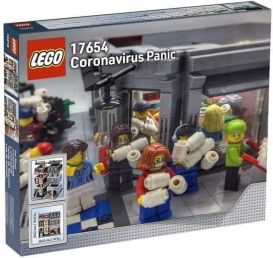
Fear has manifested itself in the form of irrational actions. Every day right now we see people doing unreasonable things because they are afraid.
“So are you saying that Covid-19 is not as bad as we think and that everyone has overreacted?”
Not quite. There is a difference between acting out of fear and acting out of wisdom. Fear is irrational and wisdom is rational.
For example, when our government leaders choose to shut down businesses temporarily and close borders indefinitely, they are making reasonable decisions in an attempt to slow the spread of the novel Coronavirus.
But if our leaders go all out and prohibit doctors from going to work so that they do not contract the virus or pass it on to others, they would probably be responding out of fear rather than wisdom. Refusing care to suffering victims is not a reasonable response.
When we go to the store every week to buy food and other necessities, we are being wise. We need those things to live healthy lives on a daily basis. But many of us have crossed the line from wise to unreasonable; hence the barren grocery stores.
I understand that not everyone in America has enough food for two weeks. Living here and visiting many homes, however, has convinced me that most people have enough food and soap and toilet paper to last at least two weeks and probably much longer.
Check your pantries. Look in your freezers. Revisit your secondary freezers. Go to your storage closets.
I am going to guess that most people who have been stocking up already had enough supplies to last them a month. That’s how we operate here in America. We usually buy more than we need and already have enough to sustain us for a long time.
Thus the panic buying of the last couple weeks is unreasonable (for most people). Thus we are acting irrationally rather than rationally.
The bottom line is that fear makes us act in ways that are not logical or good. In other words, not only have we chosen to be afraid, we have also chosen to respond to our emotional creation the wrong way.
Unfortunately, we are creatures of habit, and many of us live in fear every day. For the most part, the novel Coronavirus has not struck fear into our hearts; rather, Covid-19 has revealed the fear that has lurked beneath the surface of our smiling faces for years.
This time we simply have a harder time keeping our fear hidden. I will explain more in my next post.
By the way, I’m curious. How long will your stash of toilet paper last you? Please leave a comment below and humour me!
*you can conduct your own study to see how long your toilet paper will last by visiting https://howmuchtoiletpaper.com/ (special thanks to my brother-in-law Paul David Larson for sharing the link with me)
(If you enjoyed this post, I would appreciate it if you share it with others!)
 Our world has a fascination with fear.